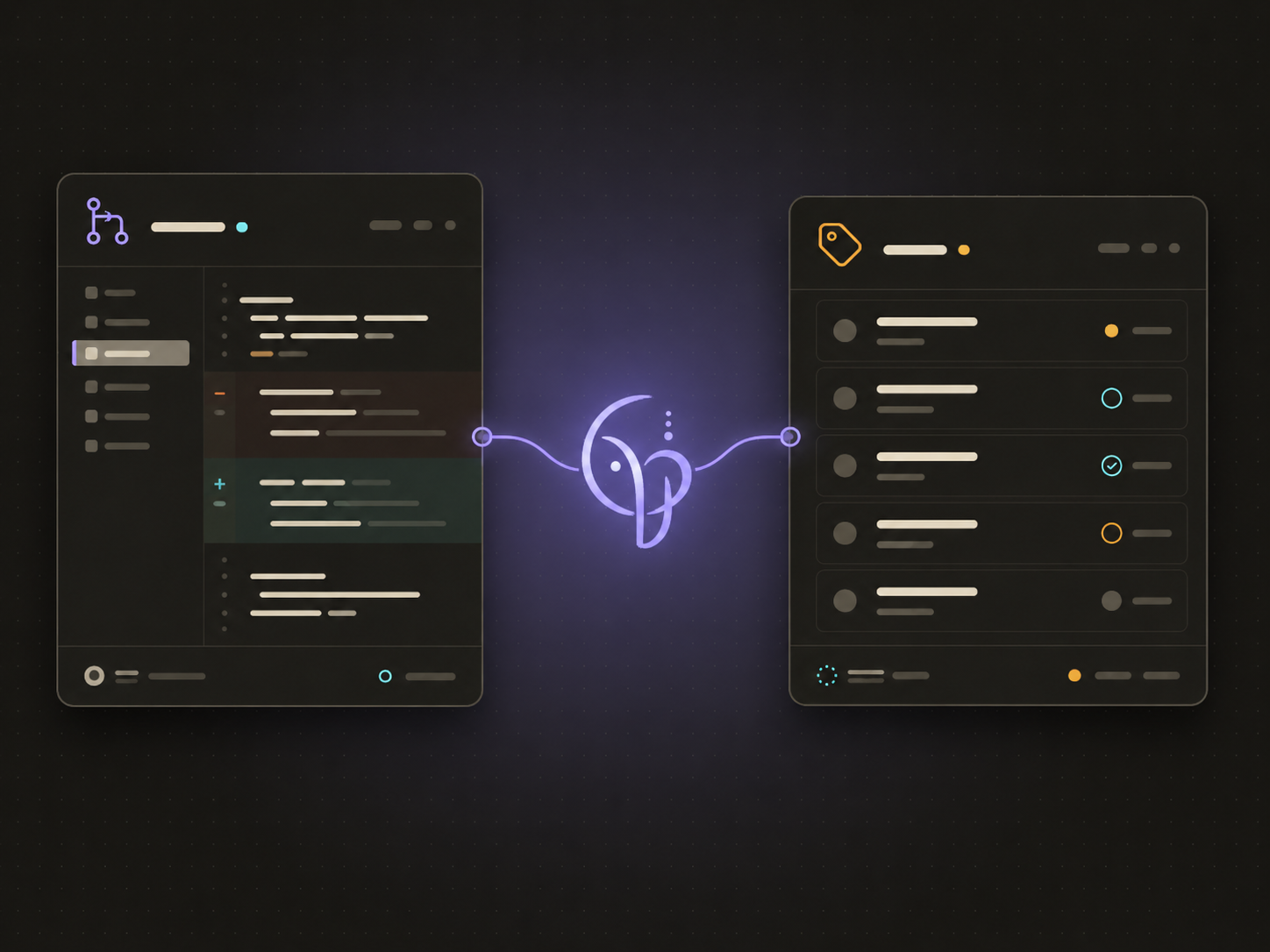
It started as one link between a pull request and a Jira ticket. Now it connects your whole toolchain into a reasoning graph, so engineers and their AI agents work from the full context behind the code.

Virgo started inside a go/ links app, as one small feature that linked a GitHub pull request to its Jira ticket. When a PR mentioned something like PROD-989, the ticket showed up right on the PR page, so you could see the reason for a change without going to Jira.
We called it NLS, for Negative Latency Search, because the context should reach you before you go looking for it. The feature was small, but it kept earning its place. GitHub had the code. Jira had the reason. Together they gave a change a history neither tool held on its own. That became the idea behind everything after, so we renamed it Virgo and kept connecting tools.
The first link made the next gap obvious. It tied a change to its reason, but the design behind it still lived on its own, so Google Docs came next. Then Slack, where a lot of the decisions get made. Then Google Meet, where the discussion before the decision lives. Each tool we connected made the ones before it more useful, and together they became the first version of Virgo.
Connecting the tools surfaced the next problem: distance. The context was richer, but it still sat outside the editor where the work happens. So Virgo moved in. Through MCP, it works inside Claude Code, Cursor, and Windsurf, the reasoning a question away instead of a tab and a search away.
With enough work connected, Virgo stopped being a set of links and became a reasoning graph: the tickets, docs, threads, meetings, and code changes around a piece of work, tied together by how it unfolded. That changed the questions it could answer. A search finds an artifact. Virgo reconstructs the path that led to it.
The name is deliberate. A knowledge graph maps what an organization has: the entities and how they relate. Virgo records how the organization decided: the trigger behind a change, the constraint that shaped it, the alternative that lost. We call that a reasoning graph, and the difference is the whole product.
Decision lineage came straight from that graph. You can trace what triggered a feature, which constraints shaped it, what alternatives came up, and who touched it along the way. And the learning feature gave AI agents a shared memory, so what one agent works out is waiting for the next instead of vanishing when the session ends.
That is where Virgo is now: the tools your team already uses, connected into one reasoning graph. Ask about a change and it assembles the context behind it, why it is built this way, what led to it, and who has worked on it before. You get the reasoning behind the work, put together for you.
We built Virgo because we lived this problem. We are engineers from Google and Apple who have spent years building software at scale. We lost hours to switching between tools and rebuilt the same context by hand, over and over. It rarely looked like a crisis. It looked like another afternoon lost to tabs and repeated explanations. Virgo grew out of that, one connection at a time, and it keeps growing.
The mission from here is that same idea at a larger scale: connect every tool engineering runs on, and put intelligence on top that goes beyond returning search results to show how the work fits together. It started as one link between a pull request and a ticket. It is becoming the place a company’s engineering knowledge lives, for the people who build and the agents building beside them.