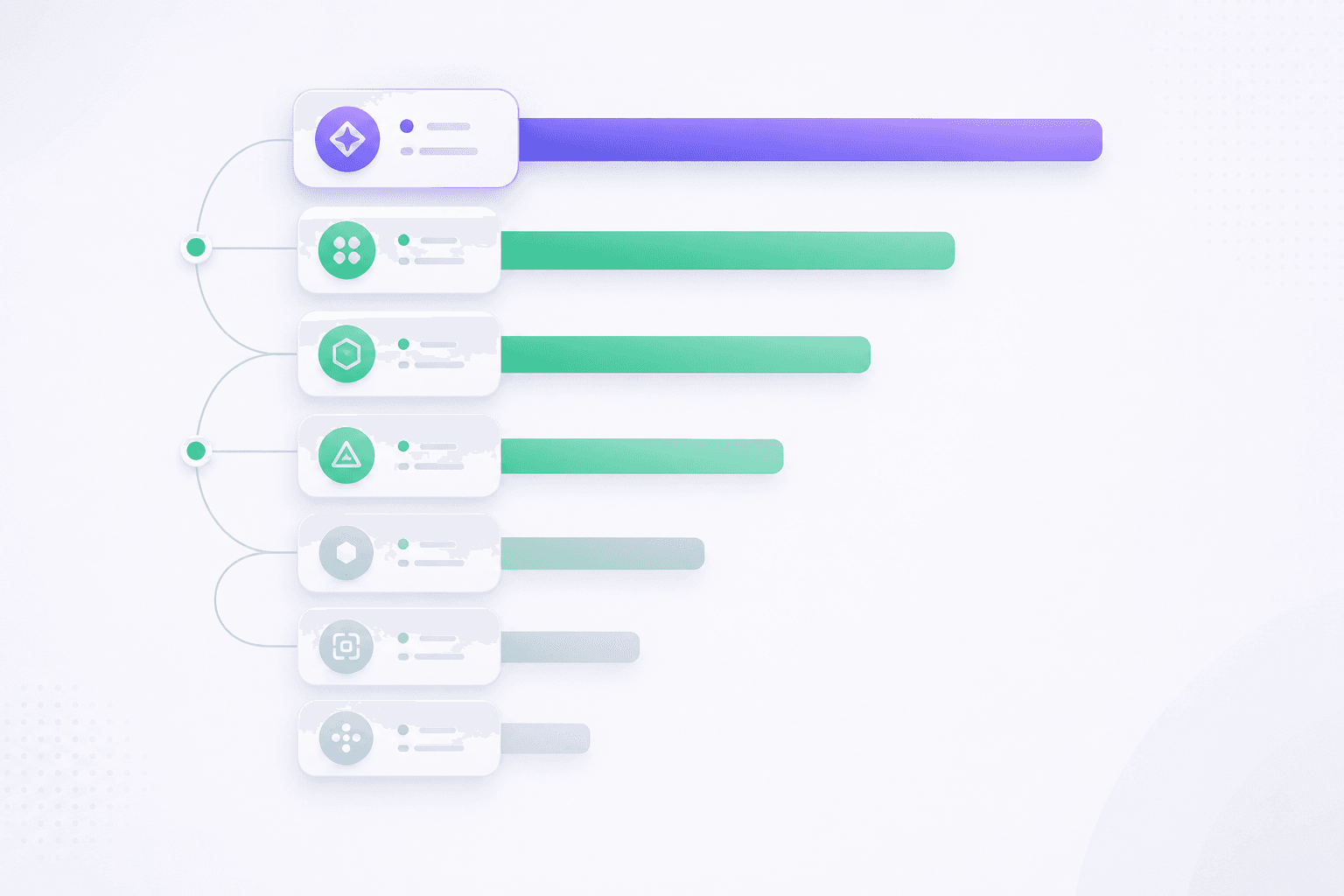
Reasoning graphs answer the questions vector RAG can’t
Vector RAG answers “what.” The questions engineers actually ask, like why a service was built this way or what led to a refactor, take causal, multi-hop traversal across a reasoning graph.

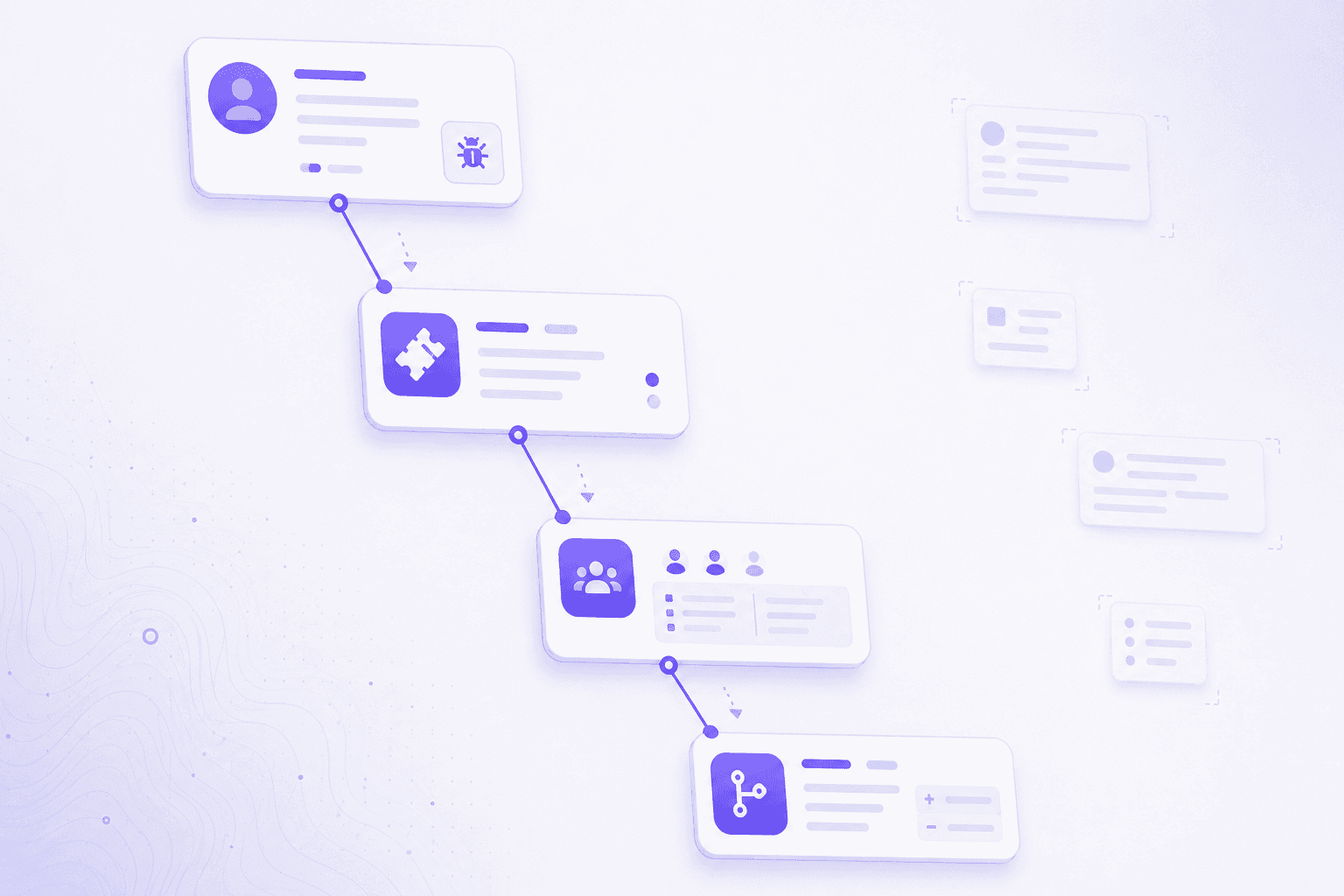
Vector RAG answers “what.” The questions engineers actually ask, like why a service was built this way or what led to a refactor, take causal, multi-hop traversal across a reasoning graph.
 Coming soon
Both connect entities. Only one records why an edge exists. That difference decides which questions the graph can answer.

 Coming soon
Search returns matches. Engineering questions need the decision chain behind a match. That calls for a reasoning layer.
 Coming soon
Single-hop similarity tops out at “what.” We built a reproducible suite to measure how far traversal reaches toward “why.”
 Coming soon
Edges like decided-in, scoped-by, implemented-by, and authored-by turn scattered artifacts into a graph that answers lineage questions.
 Coming soon
A departed engineer’s decisions stay connected to the systems they shaped. The graph preserves decision context across handoffs and team changes.
 Coming soon
Similarity points to a likely entry node. Traversal follows typed relations to reconstruct the surrounding decision context.
 Coming soon
Cosine distance cannot find the proxy constraint that killed WebSockets. The edge that answers “why” was never semantically close.
 Coming soon
Real context is scattered across tools that never agreed on a schema. Normalizing them into typed nodes is most of the work.