Reasoning graphs answer the questions vector RAG can’t

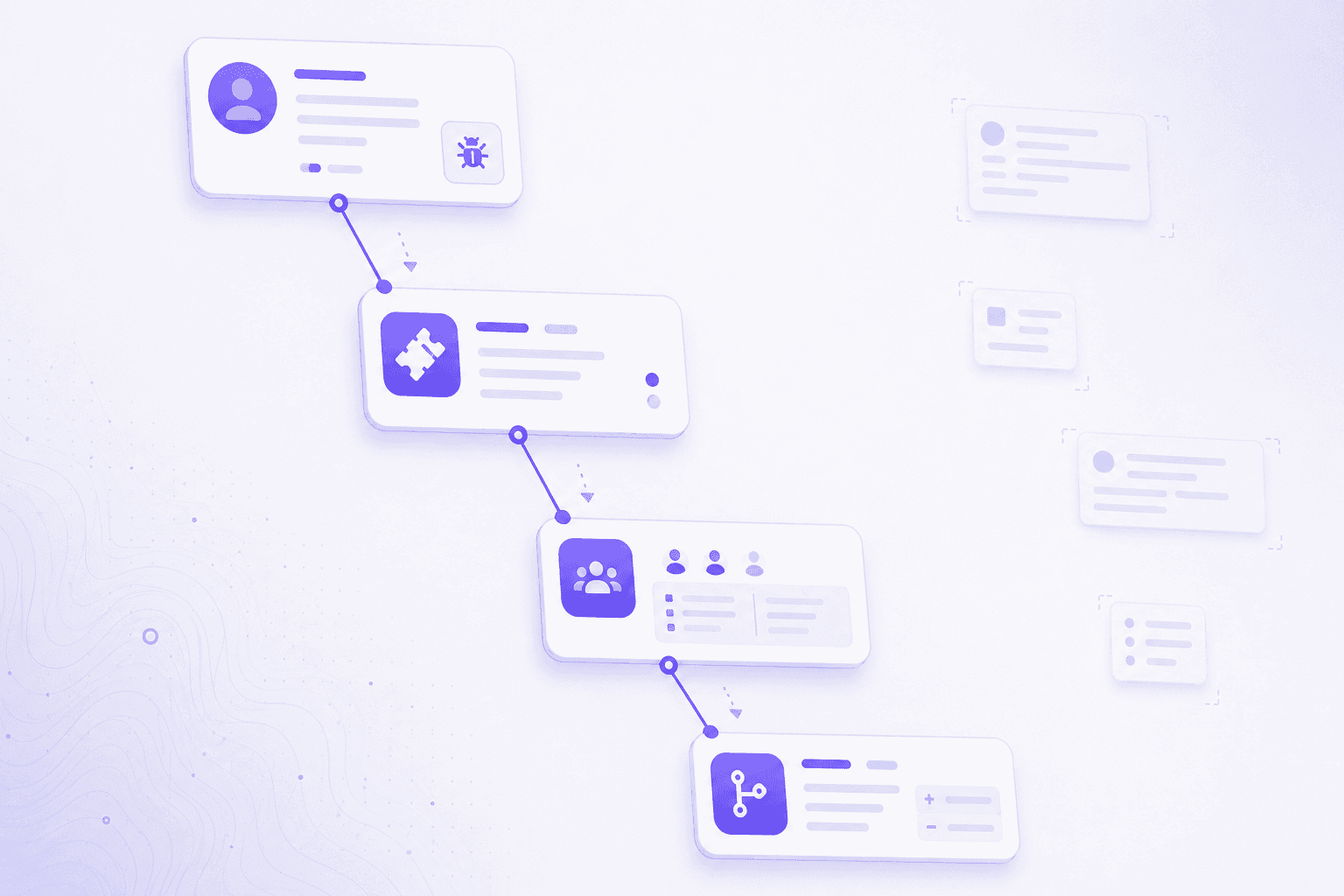
Vector RAG answers “what.” The questions engineers actually ask, like why a service was built this way or what led to a refactor, take causal, multi-hop traversal across a reasoning graph.
Ask an AI assistant what the authentication service does, and it returns the summary from a design doc. Ask why the team chose OAuth2 over SAML, or what led to the PR that refactored it, and the answer loses the chain of evidence.
Most teams hit this wall. Classical RAG handles simple, local lookups. It breaks down on the complex, multi-hop questions engineers ask every day.
Research on vector-based RAG points to three primary limitations:
- Topological limits. Vector databases retrieve chunks by semantic proximity. Knowledge-graph RAG (KG-RAG) gives the LLM explicit edges to traverse, such as
Entity A -> related_to -> Entity B. That path supports multi-hop reasoning that vector similarity cannot guarantee. - Global-context failure. Classical RAG retrieves isolated chunks, which makes concept history hard to trace. GraphRAG uses traversal to build hierarchical context. A function appears in relation to the architecture around it.
- Hallucination risk. KG-RAG grounds the answer in explicit, traversed graph paths. The reasoning chain stays visible and verifiable, with citations tied to the hops that produced it.
Virgo closes these gaps with an enterprise reasoning graph for engineering work. A graph store is the substrate. Virgo adds typed relations for decisions, constraints, artifacts, code changes, people, and agent learnings.
Causal reasoning
A standard knowledge graph links nodes with generic edges like related_to. That works for basic storage. Reasoning about complex systems needs typed relations that capture how entities interact. Virgo models those relations across engineering work.
Causality is one of those relations. Engineering work forms a chain of cause and effect: a customer issue triggers a ticket, a meeting records the tradeoff, and a PR implements the decision. Classical RAG treats each artifact as an isolated text chunk.
In Virgo, that PR is an implementation node with provenance back through the design meeting that debated the approach, the Jira ticket that scoped it, and the customer bug report that started the work.
When an engineer asks Virgo, “Why is the checkout session TTL 47 minutes?”, Virgo traverses the causal subgraph. It returns the decision lineage behind the odd number in the code — the payment provider holds a card authorization for 45 minutes, and the extra two are the buffer:
[PR #482, Set Checkout Session TTL to 47 Minutes]
      |
      +--caused_by--> [Meeting, Session Expiry Review]
                              |
                              +--caused_by--> [Jira PAY-42, Carts Expiring Mid-Payment]
                                                      |
                                                      +--caused_by--> [Customer Bug, Lost Carts in the Spring Promo]
Typed causal relations let Virgo query feature lineage and return the decision chain behind the current code. Standard RAG needs elaborate metadata tagging to approximate the same path. Virgo keeps the path in the graph itself.
Structured reasoning memory
Most agent memory stays inside chat history or a local workspace. It records a transcript and leaves the engineering graph unchanged. Virgo stores useful agent and team learnings as nodes connected to the systems, decisions, and artifacts they affect.
Suppose a senior engineer says in a meeting: “The new user-profile service shouldn't hit the database on every request. Add a read-through cache.” Virgo extracts the statement as a learning node and links the guideline to the service. The same pattern works for design docs, code reviews, chats, and agent sessions. Useful lessons become reusable context, with provenance intact.
In a classical RAG system, the statement remains an isolated text chunk. Virgo identifies the entities involved and links the learning node to the existing user-profile service entity, which ingestion already captured.
When an agent or engineer later asks, “What are the architectural constraints for the user-profile service?”, Virgo traverses the graph: it locates the service node, follows the edge to the learning node, and returns the relevant constraint with its original context. This anchors team knowledge to the concrete systems it affects.
In short
Classical RAG over vector or hybrid stores handles simple lookups. Real engineering work demands causal, multi-hop reasoning across artifacts, decisions, constraints, and code. Virgo builds that reasoning on a graph with typed relations. It answers why work happened, how a system evolved, and which prior lessons should shape the next change.